
Massive healthcare companies like UnitedHealth Group and Anthem are soaring amid an undecided election — and it’s because an overhaul of health insurance is looking less likely, analysts say
An undecided presidential election is giving healthcare companies a decided picture on what might happen with healthcare policy over the next four years.
Big for-profit health-insurance companies traded as much as 15% higher Wednesday morning amid a presidential election that remained too close to call. Cigna’s share price jumped about 15%, while Anthem and UnitedHealth Group were trading about 13% and 12% higher, respectively. Humana’s share price ticked up about 7%. Centene, Molina, and CVS Health, which owns the insurer Aetna, were also trading higher as of Wednesday morning.
Industry analysts said investors were reacting to where the races stood Wednesday morning, particularly in the US Senate. The status of the elections indicated it was unlikely there would be major healthcare policy changes anytime soon. Moreover, the “blue wave” hasn’t occur, which is a great result for insurers, as it lessens the likelihood that progressive policies that could weaken insurers’ profits will be implemented.
“The market likes visibility,” Stephen Tanal, a managing director at SVB Leerink, said in an interview. “When there’s visibility, people pay a lot more as a multiple of earnings for those earnings if they’re pretty sure what they’re going to get.”
Maintaining a healthcare status quo
What investors and healthcare companies could get looks a lot like the status quo, as Democrats appear unlikely to gain more than a narrow majority in the US Senate, if they flip the Senate at all.
Tanal said stocks would do well if either party won a narrow majority in the Senate, no matter who wins the presidency. If the Republican Party kept its majority, the status quo would remain — and insurers like the status quo. They’ve learned to live with the rules and regulations of the Affordable Care Act.
On the flip side, if the Democrats won a narrow majority in the Senate, Tanal said it was still unlikely that they could push a public health-insurance option through, let alone “Medicare for All.” It’s a good bet that at least one or two Democratic senators would oppose more progressive healthcare policies that could threaten health insurers’ bottom lines, he said.
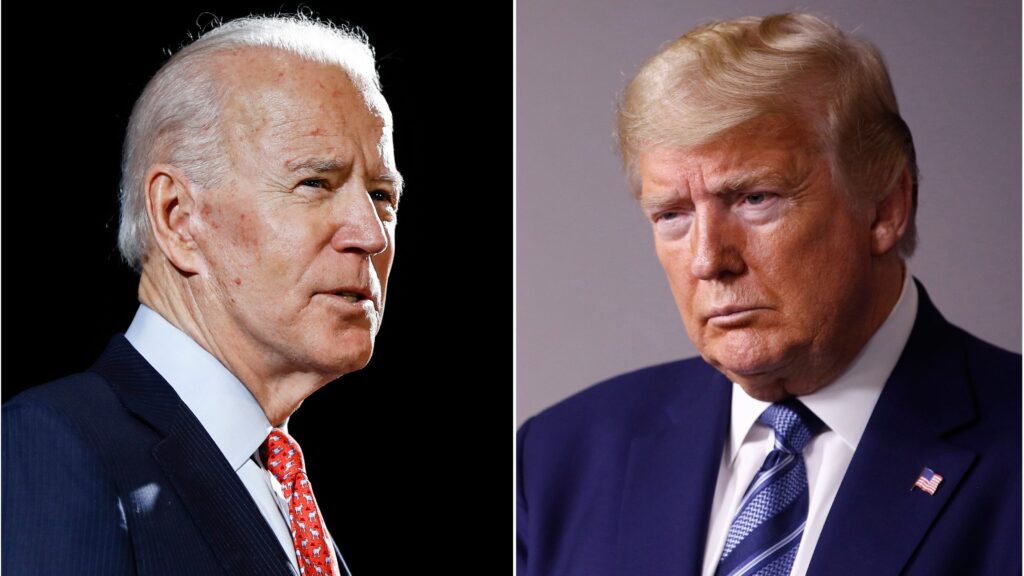
A public option, which has been proposed by Democratic presidential nominee Joe Biden, would give Americans the opportunity to buy a health plan that is run by the federal government, like Medicare, and offered alongside private plans. Under Medicare for All, all Americans would get health coverage through the federal government’s Medicare program, which today is available to older people. The health-insurance industry opposes both the public option and Medicare for All.
No ‘blue wave’
By now, it’s “clear that the ‘Blue Wave’ did not materialize,” which is an “excellent” result for health insurers, Scott Fidel, an analyst at the investment bank Stephens, wrote in a research note Wednesday morning.
That diminishes much of the risk for a public option, higher corporate taxes, and comprehensive drug-pricing reform, he wrote.
While Biden has signaled he would build on ACA with the public option and bigger tax subsidies, President Donald Trump has implemented policies that weaken ACA and open up access to insurance options that don’t provide all the ACA consumer protections, such as the ban on insurers denying coverage to people with preexisting conditions.
Trump actively supports a lawsuit to strike down the landmark healthcare law. US Supreme Court oral arguments in that lawsuit led by a coalition of Republican state attorneys general are scheduled for November 10.
Analysts are bullish on Anthem, Humana, and UnitedHealth. But the insurers Centene and Molina are likely to trail the others, as they make a lot of money on ACA business, including the public insurance exchanges and Medicaid expansion, Tanal said.
Some investors fear that the Supreme Court will invalidate ACA, an outcome that would put a big dent in Centene’s and Molina’s earnings. Anthem, Humana, and UnitedHealth’s earnings are less dependent on ACA business.
Source: Business Insider
LinkedIn
Twitter
Facebook

AXA UK partners with Logistics UK and Driving for Better Business to bolster fleet risk management
August 21, 2026
AXA UK has partnered with Logistics UK and Driving for Better Business as part of a refreshed commercial fleet offering.

$100m IPO: Orion180 files S-1
August 21, 2026
Homeowners and flood insurance provider Orion180 Insurance Group has filed a Form S-1 with the US Securities and Exchange Commission for a proposed initial public offering of its Class A common stock.

A$385m ClearView deal: Zurich completes Australian life buy as composite insurers rebuild protection books
August 21, 2026
Zurich has completed its acquisition of ASX-listed life insurer ClearView Wealth, a move that underlines a wider strategy among global composite insurers to rebuild the life and protection books their rivals spent years dismantling.