Bowtie has launched Bowtie StillCover, a supplementary medical insurance plan designed to provide additional protection for Hong Kong residents who rely on public hospitals or have chronic conditions that can make obtaining conventional private medical coverage more difficult.

The plan is available in Basic and Advance versions and is aimed at two groups in particular: people with well-managed conditions such as hypertension, high cholesterol, high blood sugar or Type 2 diabetes, and people who primarily use Hong Kong’s public healthcare system but want additional financial protection against long waiting times and out-of-pocket medical costs.
Bowtie said people with chronic conditions can face rejection or premium loadings when applying for Voluntary Health Insurance Scheme (VHIS) plans, potentially leaving them without access to private medical coverage.
At the same time, public healthcare users can face lengthy waits for non-urgent procedures and significant costs for certain drugs, medical devices and diagnostic services.
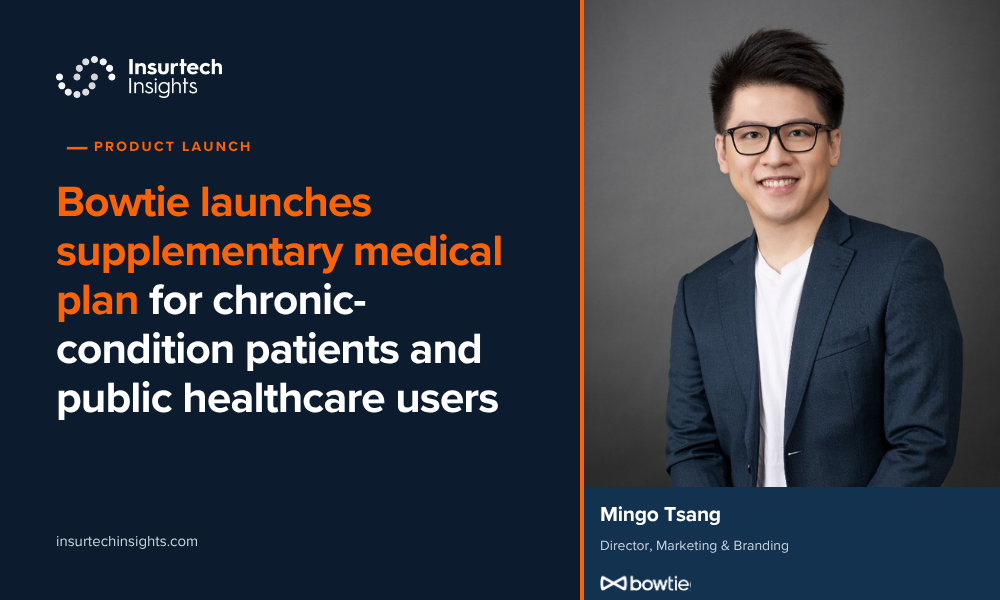
“Launching ‘StillCover’ is a concrete step forward in extending the boundaries of what the market can protect,” said Mingo Tsang, director of marketing and branding at Bowtie. “We want to add a missing piece to the puzzle beyond VHIS.”
Two levels of protection
The Basic Plan provides up to HK$500,000 in benefits per policy year under a co-insurance mechanism. Coverage includes eligible hospitalisation and surgical expenses at Hong Kong public hospitals, self-financed drugs and medical items, prescribed diagnostic imaging and second medical opinions.
The Advance Plan adds coverage for 182 designated surgical procedures, including joint replacement, endoscopy, and prostate and uterine surgery.
It also provides access to a network of designated private hospitals and Greater Bay Area medical institutions. These include CUHK Medical Centre, Gleneagles Hospital Hong Kong and The University of Hong Kong–Shenzhen Hospital.
Subject to pre-approval and policy terms, customers can arrange designated surgeries at network hospitals and access cashless hospitalisation services, reducing the need to pay medical expenses upfront.
Targeting the protection gap
Bowtie positioned the product as a complement to Hong Kong’s public healthcare system rather than a replacement for it.
The insurer said the plan is intended to give public-hospital users greater flexibility when facing procedures with long waiting periods, while helping customers manage expenses associated with treatments and medical items that may require self-financing.
The product also reflects a broader attempt to expand the pool of people who can obtain some form of private medical protection despite health histories that may make conventional underwriting more restrictive.
Bowtie said the plan is not a certified plan under VHIS and is instead intended as supplementary protection beyond the scheme. Applications remain subject to individual underwriting, with exclusions or restrictions potentially applying.
The plan is now open for applications.