
Artificial intelligence has rapidly moved from experimental pilots to a central strategic priority across the insurance industry. From underwriting and pricing to claims and capital optimisation, insurers are under increasing pressure to demonstrate tangible value from AI adoption.
However, despite significant investment, progress remains uneven. The main barrier is no longer model capability, but data readiness.

Reinsurance exposes the AI data gap
Reinsurance sits at the most complex intersection of insurance operations, combining underwriting, finance, risk, and capital management across multiple jurisdictions, currencies, and contract structures. It relies on highly detailed datasets including exposures, recoverables, and financial flows, all governed by strict regulatory and audit frameworks.
Yet in many organisations, these processes still depend on fragmented systems, spreadsheets, and manual reconciliation. This creates a structural mismatch: advanced AI systems are being deployed on top of inconsistent and incomplete data environments that are rarely updated in real time.
While spreadsheets remain useful for analysis, they are not sufficient to support transformation at scale. As a result, many of the most advanced AI applications remain out of reach. Real-time fraud detection requires continuous data ingestion, while AI-enabled underwriting depends on seamless integration across multiple datasets and workflows.
Why stronger infrastructure is essential
Other advanced capabilities highlight the same limitation. Dynamic pricing requires models that can react instantly to portfolio and market shifts. Reinsurance optimisation depends on real-time visibility of exposure and capital positions. End-to-end claims automation demands AI that operates across the full lifecycle rather than isolated touchpoints.
These ambitions are increasingly visible across the market, but they require a fundamentally different technological foundation. Modern platforms must combine APIs, scalable data pipelines, machine learning infrastructure, and deep integration with core systems where underwriting decisions are executed.
Without this foundation, AI initiatives tend to remain isolated, producing limited value and introducing operational risk rather than efficiency.
The shift from AI-first to data-first thinking
A growing number of insurers are now reassessing their approach. The key question is no longer where AI can be applied, but whether the underlying data is fit for purpose.
This is particularly evident in reinsurance, where even basic metrics such as recoverables, programme performance, or exposure positions are often difficult to access consistently in fragmented environments.
Cloud-native platforms are beginning to address this challenge by standardising data structures and integrating previously siloed systems. This transforms reinsurance data into a consistent, reliable, and AI-ready asset. Rather than layering analytics onto legacy infrastructure, insurers are increasingly rebuilding the data foundation itself.
Real-time visibility changes decision-making
Cloud-based systems are enabling a shift from static, backward-looking reporting to real-time operational insight. Insurers can now access live views of exposures, recoverables, and portfolio performance, turning reinsurance into an active decision-support tool rather than a retrospective reporting function.
This has direct implications for financial control, pricing responsiveness, and risk selection. It also strengthens alignment between underwriting outcomes and risk transfer strategies, improving capital efficiency across the business.
The importance of “always-current” data environments
One of the key challenges in scaling AI is system drift, where data models gradually diverge across regions, business units, and system upgrades. This undermines consistency and makes it difficult for AI models to scale effectively.
Modern platforms address this through “always-current” architectures, ensuring continuous alignment of data models across the enterprise. This supports consistent analytics, enables faster deployment of new capabilities, and ensures AI systems are trained on stable and trusted datasets.
Reinsurance as a strategic advantage
Reinsurance is increasingly being repositioned from a back-office function to a strategic lever. With the right data infrastructure, insurers gain improved visibility into capital efficiency, reduced leakage through better recoverables management, and enhanced decision-making speed.
AI-driven insights also enable earlier detection of emerging trends, anomaly identification, and more precise underwriting and pricing decisions. This creates a more connected operating model where data, technology, and decision-making reinforce one another.
Driving profitability in a more volatile market
Underwriting performance is under pressure from a combination of climate volatility, inflation, competitive pricing, and evolving risk landscapes. These conditions are forcing insurers to become more precise and responsive in their decision-making.
Real-time data plays a central role in enabling this shift, allowing faster pricing adjustments and improved risk selection. When underwriting and reinsurance systems are integrated through modern platforms, insurers can optimise both retained and transferred risk more effectively.
AI’s core limitation is finally being addressed
While AI adoption continues to accelerate across the industry, infrastructure remains the key constraint. The industry does not lack ambition, but it often lacks the underlying data environment required to support AI at scale.
As highlighted in the industry perspective:
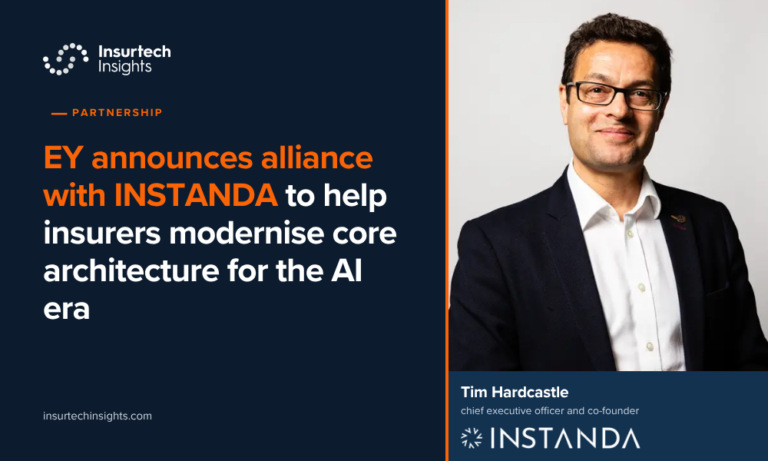
“AI cannot succeed without consistent, governed data. Fragmentation must be addressed at its source, and real-time, unified data environments are essential for scale.”
Insurers that modernise their reinsurance and data infrastructure are not simply improving operational efficiency. They are laying the groundwork for AI systems that can scale reliably and deliver sustained business impact.