Deployment will standardize data ingestion and classification across global operations
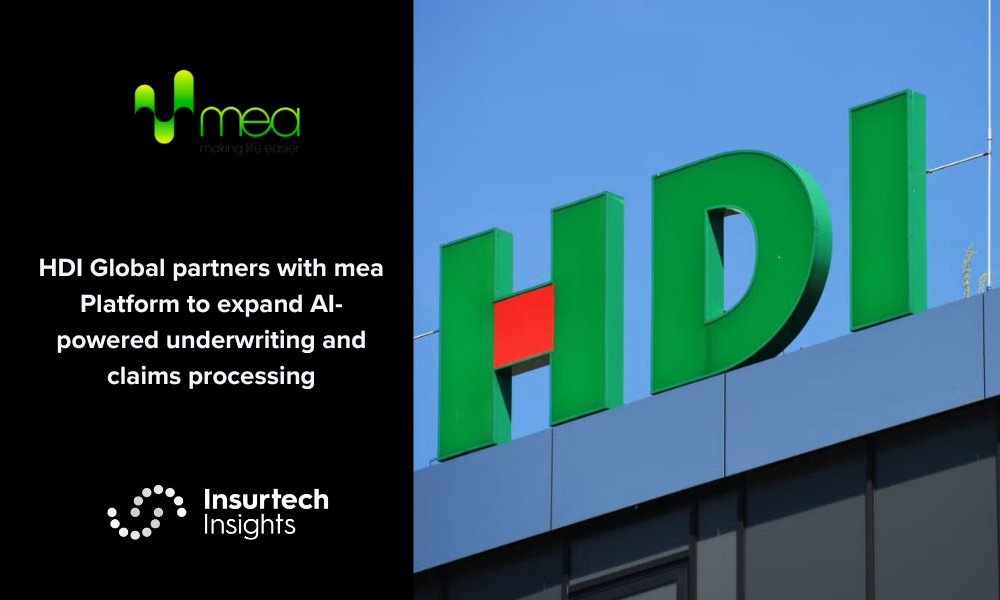
HDI Global has selected mea Platform’s Insurance Knowledge Graph and AI technology to support input management across its underwriting and claims operations worldwide, as the insurer looks to improve data processing efficiency and decision-making across its global network.
The partnership will see mea’s AI capabilities deployed across HDI’s underwriting and claims workflows, helping standardize how the insurer ingests, classifies and routes inbound information, including broker submissions, policy amendments, first notice of loss filings and supporting claims documentation.
HDI Global, part of Germany-based Talanx Group, operates in more than 175 countries and handles large volumes of structured and unstructured insurance data daily. The insurer said the initiative is intended to improve data quality and enable faster, more informed underwriting and claims decisions.
The deployment uses mea’s insurance-specific language model and Insurance Industry Knowledge Graph to provide contextual understanding for interpreting and extracting submission and claims information. The technology is designed to automate repetitive data-driven tasks while keeping final underwriting and claims decisions under human oversight.
HDI said the rollout aligns with its “Human Driven – AI Powered” strategy, allowing underwriting and claims professionals to spend more time on client service, broker engagement and risk assessment rather than administrative processing.
According to the companies, the platform is designed to integrate with existing systems without requiring large-scale infrastructure changes. HDI plans to use the solution as a consistent global input management layer that can scale alongside regional operating models and carrier platforms.
mea said its AI products are purpose-built for insurance workflows and are already supporting processing activity tied to more than $400 billion in gross written premium across multiple international markets.
The agreement reflects a broader trend across the commercial insurance sector, where carriers are increasingly investing in AI-driven intake, classification and workflow automation tools to improve operational efficiency, reduce manual processing and accelerate underwriting and claims response times.